

David's Jazz
Jazz versions of songs written by David Guilbault. Suno turns raw vocal/guitar demos into 'produced' jazz arrangements. (This is NOT an AI debate piece.) All the words & music are mine.

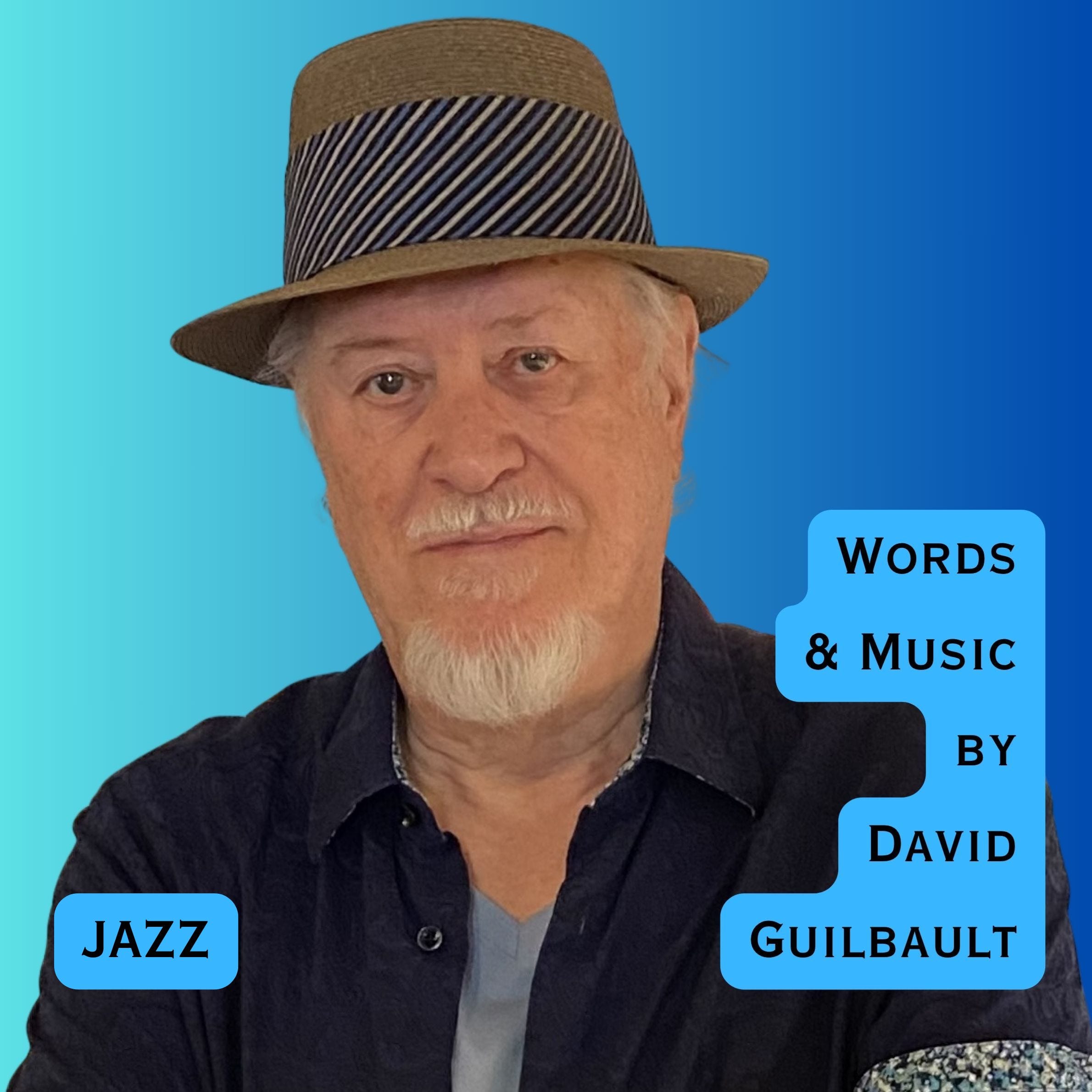
I am a songwriter.
After I write a song, I make a demo of it with me singing and playing my acoustic guitar into my iPhone. The demos are true to the words and music, but they do not reflect the arrangements I hear in my head or what other song stylists might hear.
So, I fed some of those raw recordings into the artificial intelligence called Suno and gave it a one word prompt - JAZZ. Below is what I got.
The AI listened to the songs and learned them. There is a slider in the software program where you can tell the AI how much of your own ‘style’ to use or how freely it can interpret it. I set the sliders between 80% and 100%. That way, the AI doesn’t actually change or ‘write’ any of the music or the lyrics. All the words and music are mine. The arrangements, interpretations and instrumentation are ‘assembled’ by the AI.
Of course, the AI is relying on what it has ’learned’ from listening to the greatest arrangers, interpreters and instrumentalists of all time. So, in effect, my songs benefit from the cumulative stylings of say, Nelson Riddle, George Martin or Quincy Jones. And all the other musicians from which the AI learned (or copied) their musicality.
Now, to hire professional musicians, arrangers, vocalists, conductors and the like to make song demos of this quality would cost thousands of dollars. I simply don’t have thousands of dollars to make ‘professional’ demos to try to promote to current recording artists or producers. Suno costs me eight bucks a month. That makes it a useful and affordable tool.
(I have, however, contracted musicians in the past, for reasonable sums of money. Produced demos of my songs made by actual musicians can be found on my Bandcamp album, “Selected Works.” Those talented artists would be Paul Beaudry, Chris Klimecky, Matthew Emerson Brown, Colin J Nelson, James Dean Cotton, Spencer Carlson, Jason Goessl, Jeremy Serwer & Nick Nordahl.)

(Demo songs with just me singing and accompanying myself on my Taylor 512 acoustic guitar can be found on my Bandcamp album “Myself.”)

But, I digress. Back to the AI demos.
(By the way, all this is not to debate the ‘creativity’ vs ‘thievery’ of artificial intelligence. For the record, I am against feeding SUNO lyrics and having the program ‘compose’ the melody. That’s not songwriting to me.)
As I said, the words and music in these songs are MINE. However, the vocals, instrumentation, interpretations & arrangements are Suno’s. No different, arguably, from hiring musicians, who have also ‘learned’ from the greats. Although, it certainly will be legitimately argued.
There was a composer, whose name currently escapes me, who always wanted Fred Astaire to be the first to record & release his songs. That’s because Astaire would keep true to the composer’s musical vision, recording a note-for-note rendition of the song, before stylists like Frank Sinatra and Ella Fitzgerald would make their own unique interpretations of the songs.
Likewise, I think the Suno AI, if told, starts with the most ‘predictable & probable’ renditions of my song demos, as long as I keep it constrained to my wishes, making my song more easily adaptable by whomever might want to make it part of their repertoires.
The fact is, I never really considered myself a musician. I certainly am a competent vocalist. While I enjoy performing and continue to do so, I don’t value myself talented enough to pursue a career as a recording artist. But, I do think I am a decent songwriter. Actually, I’m a pretty darned good songwriter. Thusly, it’s my songs that I hope can endure and be recorded by current and future song stylists.
To that end, I am thrilled with the demos I now have to share because of AI. This is how I imagined my songs to be heard.
(My biggest gripe with Suno is that it insists on tacking on intros and outros that are too long, no matter how much I prompt it to not do that. Any song publisher listening to demos, I presume, wants to get right to the words and melody. That’s not me, that’s the AI.)
So, I present to you some of David’s Jazz. If you know any jazz artists or producers, please hip them to these songs. Thanks. And please enjoy.
Warm Love © 2018 David Guilbault (BMI)
Careful of You © 1995 David Guilbault (BMI)
Something to Lose © 1971 David Guilbault (BMI)
This Time Around © 2013 David Guilbault (BMI)
Words, They Fail © 1998 David Guilbault (BMI)
You Could Be the One © 2018 David Guilbault (BMI)
Deep in Your Arms © 2018 David Guilbault (BMI)
Come Inside © 2010 David Guilbault (BMI)
Dew-Kissed Rose © 1972 David Guilbault (BMI)
I Never Thought © 2019 David Guilbault (BMI)
(Please note that I, David Guilbault, as the author of the words and music of these songs, and as a paid Pro subscriber to Suno, legally retain all music copyrights and commercial rights to these renditions.)
So, dear recording artists, song publishers, music producers and film & TV music supervisors, these are ALL demos. If they sound right for you, and you’d like to have your own way with them, please reach out. Thanks for your time and consideration. Please be safe and well.
In the near future I will be posting other songs from my 200-song catalogue, presented in different genres, particularly country, folk & rock. Thanks for your time and consideration. Please be safe and well. And stay tuned.
Together in harmony,
David
I think the songs are good, and I'm assuming that you like what Suno produced. For many songwriters who want something other than a guitar/piano and vocal demo, it provides a very competent alternative with any number of options. As you note, studio recording with professional musician and singers is often prohibitively expensive.